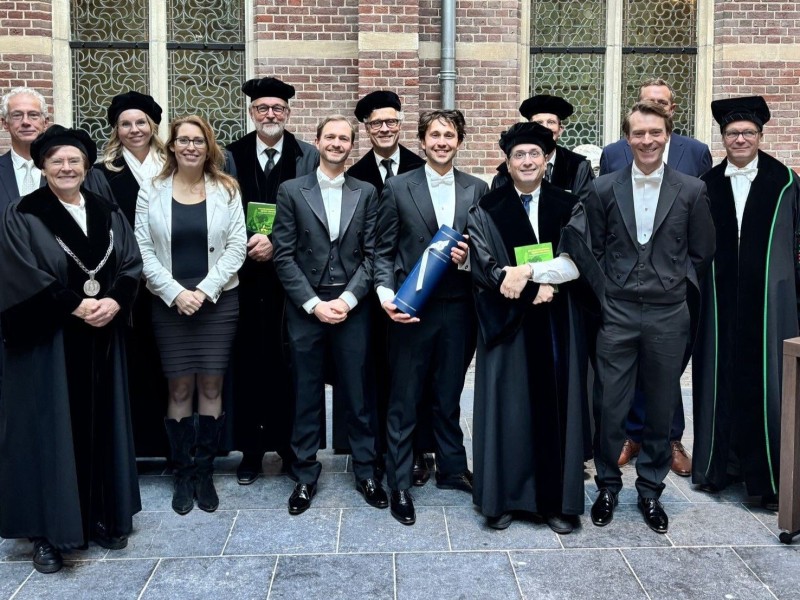
Clinical pharmacology trainees develop teaching modules
As part of inquiry-based learning, professionals training to become clinical pharmacologists developed their own teaching modules on two key concepts in pharmacokinetics.
‘Creating an educational module as a student or trainee can be really instructive and inspiring,’ says Education Director Dr Jeroen van Smeden, who is responsible for the clinical pharmacology training together with Prof. Koos Burggraaf, Dean of the CHDR Academy. CHDR offers the programme to physicians and pharmacists, in collaboration with Leiden University Medical Center (LUMC) and HAGA Hospital (a large teaching hospital in The Hague). ‘We are innovating the clinical pharmacology training programme,’ says Burggraaf. ‘This year, we conducted a survey to gain more insight into the needs of our students. We wanted to know which topics they would like to learn more about.’
One theme that was scored highly in the survey was pharmacokinetics. To provide an opportunity for inquiry-based learning, CHDR Academy asked the trainees to develop their own educational module on pharmacokinetics. To ensure the quality of the modules, two groups of trainees were supervised by Burggraaf and Van Smeden. The results were two state-of-the-art modules on key concepts in pharmacokinetics, one on volume of distribution and the other on clearance. Each module contains text, a video, and an interactive programme in which students can gain understanding by changing parameters.
Two levels
The chosen approach proved to have several advantages in addition to the end products themselves. The modules serve as a format for future education modules. A two-level approach was developed. Burggraaf: ‘Everyone needs to have a decent grasp of the basic level, as it forms the foundation for setting up and conducting a clinical drug study and for good pharmacotherapy. I believe that our clinical scientists also need to be well informed about the advanced level and that they understand the implications of the findings before and during a clinical study. This thorough understanding enables informed decisions on starting dose, study design, and for instance decisions on further dosing during a trial. All these factors may impact the safety of the study participants and the efficiency of study execution, so in my opinion it is mandatory that our clinical scientists are well-informed about these aspects.’ Developing a teaching module has also proved inspiring and motivating for the clinical pharmacologists in training. Van Smeden: ‘Trainees were really involved, sending me emails late in the evening because they were still busy with the material we had covered during that day.’
Other topics
The results of the survey will also be used in the rest of the clinical pharmacology training programme. Burggraaf: 'I found it inspiring to read the responses, what trainees want to know, often based on their own experiences at CHDR. Some of the items they asked for touched on cutting-edge themes in drug development, such as neuroplasticity and how to measure it in a drug trial. That curiosity is important for future clinical pharmacologists.'
Interested in learning more?
More articles from Developing people